Citrus shows, citrus competitions, citrus festivals, and the quickly approaching citrus and fruit tree sales seems to be the perfect time to address the subject of citrus for Galveston. What to plant, when to plant, and how to plant—the key issues when making citrus selections for your garden.
“Home-grown citrus is of superior quality to supermarket fruits,” said Dr. William Johnson, the former horticultural extension agent with the Galveston County Extension Office. “Many residents grow citrus, not only for the fruit, but also for the ornamental value trees provide to the landscape. Many types of citruses are easier to grow than many traditional fruit trees.”
Some local gardeners have trees that bear so much fruit that they are willing to share with all their neighbors. “Just come and pick what you want and take it away, please,” said one close acquaintance recently.
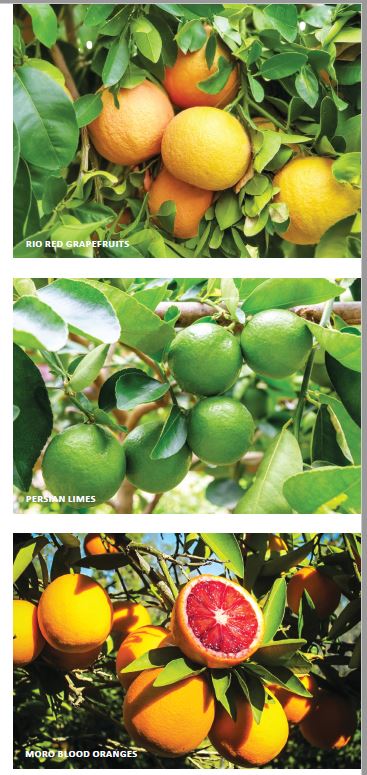
A review of the fruit entered in an Upper Gulf Coast Citrus Show is indicative of the many varieties that can be grown successfully in our area. Mexican lime, Nagami kumquat, Navel orange, and Moro Blood orange, as well as Valencia orange, Honey tangerine, Rio Red grapefruit, and Meyer lemon were among some of the wining examples.
Throughout the Houston and Galveston areas, Master Gardeners will offer prime stock especially developed for our region that is available to purchase at their annual citrus and fruit trees sale. These trees have been grafted onto rootstock that have proven historical records of exceptional performance in local landscapes and gardens, and fruit tree varieties that will thrive and flourish in Galveston.
 There are many choices at these sales, as well as at local nurseries and plant suppliers, but what are the best selections recommended for our area?
As for personal experience, the trees that have fared well in my garden have included Ruby Red grapefruit, Republic of Texas orange, Meyer lemon, and Sunburst tangerine. All of these trees have bloomed and fruited.
Other successes have included variegated Valencia orange; Loquat and Persian lime that continued to fruit year-round; along with a Mexican thorn-less lime that has never bloomed, much less produced any fruit, but instead has an abundance of thorns.
A term that you will find used at these fruit tree sales is average annual chill hours.
Chill hours are the total number of hours per season at which the temperature is below 45-50 degrees but above 32 degrees.
Chill hours not only allow fruit trees to set fruit, but also to store nutrients for future health and growth. Galveston Island averages about 200 chill hours in a typical year. To put that in perspective, the Anna apple requires approximately 200 chill hours annually, while the Gala apple requires approximately 500 chill hours annually.
According to research, the most fashionable citrus tree at the moment is the lime tree. Persian, Mexican, and Key limes are most in the demand that has built up significantly over the last few years because they are becoming more popular in cooking and beverages.
Limes are an excellent source of Vitamin C and a great substitute for lemons. They can be used for seafood dishes, chicken, meats, drinks, desserts, cakes, biscuits, and marmalade. The lime is valued not only for the acidity of its juice but also for the floral aroma of its zest.
Other citrus trees seen frequently on the Island are the ever-popular Meyer lemon, with large fruit and good taste. This is a heavy producer, although not cold tolerant, so it must be protected in extreme temperatures. An advantage is that it can be grown easily in a container.
Also seen are the well-known Valencia orange and the always popular navel orange, both good producers that are sweet and juicy. Another fashionable orange is the Moro-Blood orange with its dark colored fruit (almost a deep red) that is also very juicy and sweet. The fruit is medium-sized, easy to peel, and usually seedless.
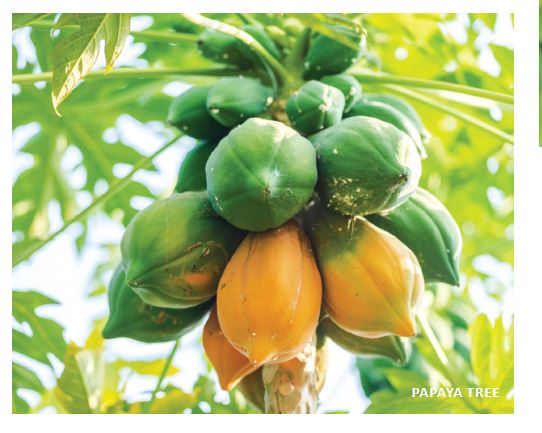
A surprise has been the sighting of papaya trees in several locales in Galveston, particularly on the east end and mid-isle, not only thriving but producing abundant fruit. A giant herb, the papaya plant is extremely fast growing and can soar to thirty feet in height and produce fruit within a year of planting. A perennial that may live to twenty years, the papaya is sometimes called a tree melon.
 Whether eaten alone as a treat, added to a fruit medley, a green salad, or as a garnish that complements your entrée, the papaya is a refreshing and exotic delight to the palate. Papaya has a fragrant musky aroma with a sweet mouthwatering tang, even the spicy seeds are edible.
More than the typically offered citrus, other fruiting plants to consider for Galveston when choosing what to plant include apples (Anna, Dorsett Golden), apricots, figs, nectarine, peach (O’Henry, Suncrest, Topaz), pear (Bartlett or Asian), plums, grapefruit (Rio Red and Ruby Red), and new strains of avocados are also being suggested and recommended.
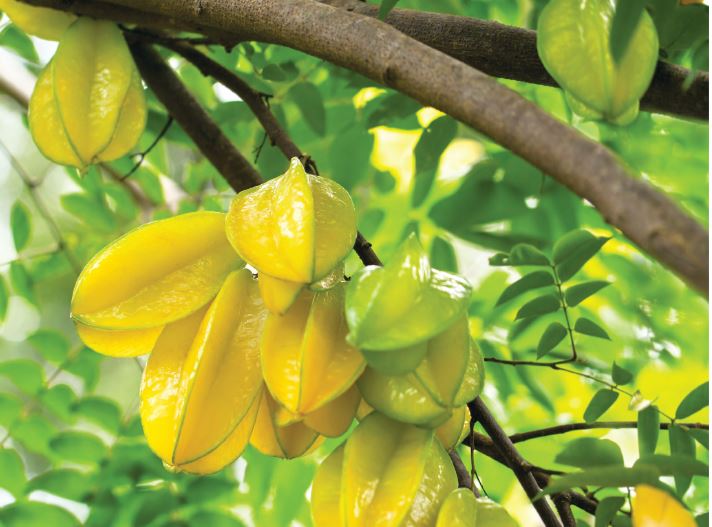
Or consider an exotic like the incredible Carambola, also known as Star Fruit. This small- to medium-sized evergreen ornamental tree has attractive foliage, astonishing star-shaped fruit and boasts lovely pink and lavender blooms. It is said that the small pale-orange fruit hangs like “small golden beacons” throughout the tree adding a particular charm to your garden.
 It is fast-growing, drought tolerant, and yields high quantities of quality fruit. The fruit itself is crisp in texture, a combination taste of apple, pear, grape, and citrus and when cut in cross-sections reveals its unique star shape.
Plant in full sun in organically enriched soil in an area that is sheltered from wind, fertilize with a balanced liquid fertilizer several times during the growing season, and water regularly, but do not let the plant sit in water.
Always try to plant your citrus in full sun. The more sun provided, the better. They are generally not too fussy about the soil, but they do need good drainage, moderate water (not soggy), and an occasional application of nitrogen from March through August.
Citrus requires a minimum of pruning (best done in February) to remove dead wood or suckers, however, heavy pruning may slow fruit production. Mulch with compost or other organic material, making sure that the mulch does not touch the trunk of the tree.
Flower and fruit drop are unavoidable, but remember as your tree matures, it will produce more fruit; meanwhile you can enjoy the swallowtail butterflies that are delighting in your choice of citrus trees.