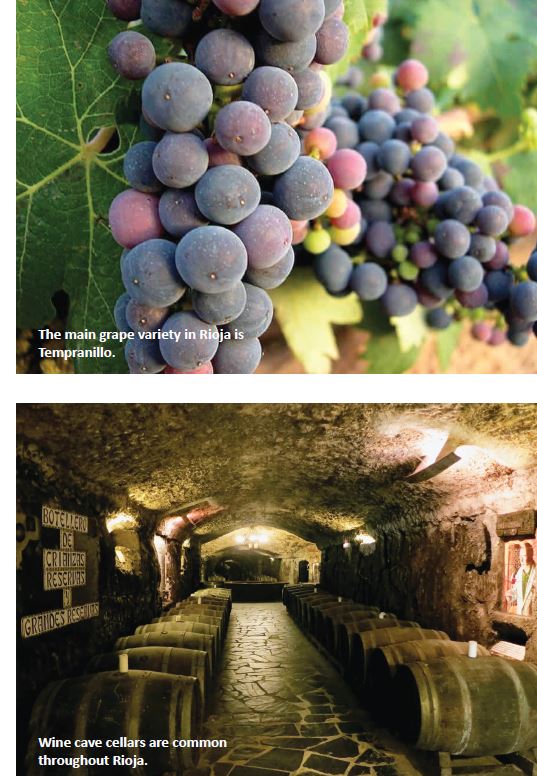
The Rioja region is not just the gold standard of wine making excellence in Spain, it is considered to be one of the top five wine regions globally. It is recognized as the birthplace of the Spanish language and as the birthplace of the Tempranillo grape, but it is most known for its beautifully aged red wines.
The region’s winemaking history is long, it dates back to the Phoenicians who settled in the area in the 11th century B.C., and the local people have been making wine almost continuously since that time.
Modern Rioja, however, was born in the 19th century as Rioja winemakers traveled to Bordeaux and learned new techniques, eventually bringing oak barrels back to age the wines and firmly establishing the link between their wine and the place in which it was made.
Interestingly, although the region was not the first to incorporate barrels in wine production, Rioja now has the most barrels of any wine producing region in the world with approximately 1.3 million of them.
Rioja is located in the north of Spain with designated land on both sides of the Ebro River. It is divided into three zones: Rioja Alta, Rioja Alavesa, and Rioja Oriental. The greater region houses over 160,000 acres of vineyards managed by 14,800 vineyard growers with over 87 percent of the red grapes planted being Tempranillo.
Red varieties makeup 91 percent of all the grapes planted with Garnacha Tinta aka Grenache, Graciano, Mazuelo, and Maturana Tinta playing a supporting role to Tempranillo.
White grapes only account for 9 percent of the vines with Viura being the top white followed by Tempranillo Blanco, Garnacha Blanca, Verdejo, and international grapes Sauvignon Blanc and Chardonnay.
Every bottle of Rioja wine is marked with a DOCa trust seal that ensures the producer has adhered to the strict rules of wine making and aging that is required from how the grapes were grown to bottling. This authenticity seal also alerts consumers to the different styles of Rioja wine with a designated color for each.
 The Cosecha label is green and is used for young whites, roses, and reds that have little to no aging and less restrictions, this is a more creative category as winemakers have more flexibility during the winemaking process. Newer trends include carbonic maceration, stem inclusion, and whole cluster fermentation. Fresh, fruity, and affordable are typical in this category.
The Crianzo label is red and only covers red wines aged a minimum of one year in barrel and one year in bottle and white wines that have spent a minimum of six months in barrel. These are typically easy drinking, everyday wines that are fresh and juicy with subtle notes from the oak aging.
The Reserva label is wine colored and designates a minimum of three years of aging including at least one year in barrel and six months in bottle for reds and a two-year minimum aging time for whites which must include at least six months in barrel. Wine drinkers should expect to find a more complex fruit and spice character in this benchmark for quality and style.
The Gran Reserva label is blue and tells consumers that a red wine was aged for at least five years of which a minimum of two years was in barrel and a minimum of two years in bottle and a white wine or rose wine was aged for four years of which six months was spent in barrel.
Although the region has a rich history of tradition, Rioja is still very innovative. In 2017, new changes were announced that were implemented by 2019.
These include approving sparkling wine production, codifying new white blends of which Viura must be at least 51 percent, and most importantly, including the origins of the grapes by adding the village, the subzone, and unique vineyards called Vinedos Singulares to the bottle label.
Labeling bottles with the more specific growing area will now allow consumers to discover how these differences show in the glass.
The Rioja Alta is the largest of the three subzones, the vineyards sit on gentle terraces and alluvial plains with all three of the major soil types and a strong Atlantic Ocean influence.
The Rioja Alavesa is Basque country and is also the smallest subzone. It is located north of the Ebro River, and it too is influenced by the Atlantic but sits on calcareous clay soil.
The Rioja Oriental also known as Rioja Baja is the flattest area but also contains high altitude hillsides. It is warmer and drier with a more Mediterranean climate and features more Garnacha plantings. There has also been a rise in organic production in this area.
When perusing wine lists or local wine shop shelves, look for classic producers like Bodegas Faustino, La Rioja Alta, Lopez de Heredia, Marques de Murrieta, or Hermanos Pecina to taste from the makers that helped make the region great or choose wines from newer producers that are bringing a new voice to the region like Bodega Lanzaga, Bodegas Artuke, Bodegas Izadi, and Sierra de Tolono.
RIOJA WINES TO SEEK OUT NOW
Carlos Serres Blanc de Blancs Espumante 2019 This iconic Rioja family has now seen four generations of production. They farm sustainably but are in the process of converting to fully organic. This modern sparkling wine is produced in the traditional method using Viura, Chardonnay, and Tempranillo Blanco.
Campillo El Sueno Rioja 2018 This white blend of 75 percent Viura and 25 percent Chardonnay from Rioja Alavesa is produced by Bodegas Faustino, one of the most celebrated names in Rioja. It has rich texture from the barrel fermentation and regular battonage.
Baron de Ley Rioja Reserva 2016 This 100 percent Tempranillo wine comes from the Rioja Oriental and spends 20 months in American oak barrels giving it the classic Rioja profile.
Imperial Rioja Gran Reserva 2015 From the Rioja Alta zone, Imperial was first produced in the 1920s and is made only in years that the grapes are deemed a high enough quality to make it. This wine is a blend of 85 percent Tempranillo with Graciano and Mazuelo and spends 24 months aging in a mix of new American and French oak and another three years aging in the bottle.