She has never slipped quietly into history. Even at rest along Pier 21, the 1877 tall ship Elissa seems alive - rigging humming in the Gulf wind, iron hull holding the memory of oceans far beyond Galveston.
She is not a replica, nor a museum piece meant to sit still. She is a survivor. And in the summer of 2026, she will do what she was built to do: sail.
For the first time in decades, Elissa will leave the familiar rhythm of Galveston Harbor and embark on a three-month, 2,500-mile voyage north as part of Sail250 - a global gathering of tall ships and military vessels marking the United States’ 250th anniversary.
When she reaches New York Harbor for the Fourth of July celebration, she will arrive not as a curiosity, but as the oldest vessel in the flotilla.
It feels fitting. If any ship understands endurance, it is Elissa.
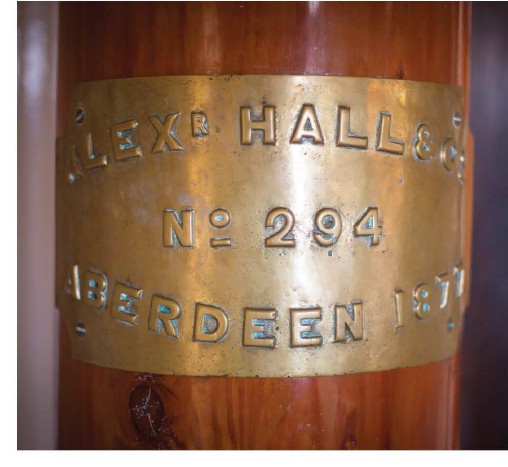 Built in 1877 in Aberdeen, Scotland, she emerged at the tail end of the Age of Sail, when steam power was already reshaping global commerce. She was never meant to be nostalgic.
She was built to work - an iron-hulled, three-masted cargo carrier designed for oceans that were still unpredictable and often unforgiving.
“Being the oldest ship in the Sail250 flotilla means Elissa isn’t just participating, she’s representing actual maritime history in the event,” said Will Wright, Chief Creative Officer for the Galveston Historical Foundation.
“Built in 1877, she sailed these same waters and visited many of these ports in the late 19th century. It’s a powerful visual reminder of how long these maritime traditions have endured.”
For nearly a century, she did what ships like her were built to do - carry cargo, carry people, carry stories. Cotton, bananas, anything that filled her hold and justified the miles.
She circled the globe, slipping into ports that would have felt as distant as another world to those who stood on her decks.
And then, like so many ships of her era, she was nearly lost.
By the time preservationists found her in Greece, she was slated for scrap - another relic destined to be dismantled and forgotten. Instead, she was rescued, restored, and brought to Galveston in 1979, becoming something rare in the modern world: a historic ship that still sails.
That distinction matters more than most people realize. There are older ships. There are more ornate ships.
But very few still move under wind and human hands, still demanding the same labor, skill, and respect they required nearly 150 years ago. Elissa is one of them.
“What Elissa does, that only a couple of others still do though, is sail. Our ability to maintain and sail Elissa is one of the pivotal pieces to her importance,” said Wright.
“It not only ensures her story continues but it remains an active piece of her connection to us and her visitors.”
To stand on her deck is to understand something fundamental: history is not quiet. It creaks, it strains, it demands work. And right now, it demands a great deal of it.
Preparing Elissa for this voyage has been anything but ceremonial. In drydock earlier this year, she was surrounded not by admirers but by welders, carpenters, riggers, and engineers - each focused on a single goal: making sure she can do this again.
A new jibboom now stretches from her bow. Fresh sails have been fitted. Her galley is being rebuilt.
Chains, generators, desalination systems - modern necessities layered carefully onto a 19th-century vessel that must remain true to itself while surviving a 21st-century journey.
“At her core, she’s still a working 19th-century sailing vessel,” he said. “But to operate at this scale, we do incorporate modern systems where they’re necessary… navigation technology, safety equipment that meet current standards.”
Those updates, paired with rigorous U.S. Coast Guard inspections, are what allow Elissa to remain “an active sailing ship rather than a static exhibit.” Because this is not a symbolic voyage. This is real.
She will leave Galveston in mid-May, threading her way along the Gulf and up the East Coast, stopping in ports that feel both new and familiar - Pensacola, Savannah, Yorktown, Portsmouth - each one an opportunity to share Galveston’s story with a different audience.
At every stop, visitors will step aboard expecting to see history. What they will encounter instead is something alive.
A crew of roughly 40 - most of them volunteers - will live and work aboard her, climbing rigging, handling lines, standing watch. Many train for years for the chance to make a voyage like this, knowing it may come only once in a generation.
“The volunteer crew is what makes this possible,” Wright said. “Without their dedication to the ship and the training program, we wouldn’t be able to continue to sail the ship annually, much less to take part in something of this scale.”
He added that the program has become a model for other organizations, but beyond that, “the crew also embodies the spirit of the ship.”
They will sleep in bunks, eat in a rebuilt galley, and rely on one another in ways that feel increasingly rare in a world built on convenience.
There is a romance to that, certainly. But there is also reality: three months at sea - or close to it.
Weather that refuses to cooperate. And the constant awareness that this ship, for all her strength, is still subject to wind, water, and time.
And then there is the arrival. New York Harbor, July 4. Fireworks, crowds, cameras - a skyline that did not exist when Elissa first crossed the Atlantic.
“It’s hard to overstate what that moment will feel like,” he said. “When she sails into the harbor, you’re not just watching a ship arrive, you’re watching a piece of living history return to a place it’s been before, across more than a century of time.”
The last time she entered that harbor was in 1986, for the Statue of Liberty’s centennial. Nearly forty years later, she will do it again - this time as the oldest vessel in a fleet celebrating the nation’s 250th year.
“It’s a defining moment for us,” Wright said of what the voyage means for Galveston. “To be able to represent Galveston’s history and tourism on a national level like this is exciting and important.”
Because Sail250 is not just a celebration of a nation - it is a reminder of how that nation first became connected. By water. By ships. By people willing to cross distances that once felt impossible.
In that sense, Elissa may be the most honest participant in the entire event. She is not reenacting anything. She is doing exactly what she was built to do.
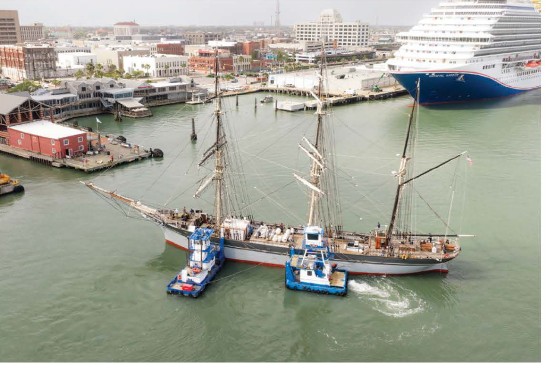 That authenticity is part of what makes this voyage so significant - not only for Galveston, but for the broader conversation about preservation. In an age when history is often reduced to exhibits and placards, Elissa insists on something more immersive, more demanding.
She requires effort. Investment. Belief. And Galveston has given her all three.
The Galveston Historical Foundation has spent decades ensuring she remains not just intact, but operational - a commitment that extends far beyond preservation into something closer to stewardship.
“Our long-term vision is to keep Elissa active, relevant, and accessible as a living ambassador for Galveston’s story,” he said. “Continuing to sail Elissa ensures that she remains a dynamic part of how we interpret and share maritime history.”
That stewardship is about to be tested on a national stage. Sail250 is expected to draw millions of spectators and global media attention, placing Elissa - and by extension, Galveston - in a spotlight that no amount of marketing could replicate.
“I hope people have a memorable experience,” Wright said, whether they step aboard or simply see her under sail. “And ultimately, I hope it sparks a broader awareness of Galveston’s place in maritime history.”
This is not just a voyage. It is a statement - that Galveston’s story matters, that its maritime history is not a footnote but a central thread in the American narrative, and that a nearly 150-year-old ship still has something to say.
After New York, Elissa will continue on to Boston before turning south again, racing the slow creep of hurricane season back toward the Gulf. It will not be an easy journey. But then again, it never has been.
Ships like Elissa were not built for ease. They were built for endurance - for long hauls, uncertain waters, and voyages where purpose mattered more than comfort.
And perhaps that is why she still resonates. In a world that moves faster than ever, she reminds us of something slower, steadier, and rooted in patience and care.
She reminds us that history is not something we visit. It is something we carry forward. And this summer, Galveston will carry it all the way to New York Harbor - under sail.
ABOUT SAIL250
If you think the nation’s 250th birthday will be marked with a few speeches and fireworks, think bigger - much bigger.
Sail250 is shaping up to be one of the largest international gatherings of tall ships and military vessels in modern history. It isn’t a single-day event or a single-city celebration. It’s a moving, global maritime festival, with ships arriving from around the world to mark the United States’ semiquincentennial.
At the center of it all is New York Harbor, where over the July 4 holiday a flotilla of historic tall ships, naval vessels, and international crews will converge in a spectacle that feels equal parts history lesson and living theater.
What makes Sail250 especially compelling is that it doesn’t stay put. The ships travel port to port, carrying that sense of pageantry and connection with them.
The event is designed to draw people in - especially in places steeped in maritime history - and to remind us that America’s story has always been tied to the water.
There’s something quietly powerful about seeing these ships together. Some are centuries old; others represent modern naval strength. All of them, in their own way, carry pieces of national identity, craftsmanship, and tradition.
It’s not just a celebration of 250 years. It’s a reminder of how we got here - and how much of that journey happened by sea.
FOLLOW ELISSA UP THE COAST
If you’ve ever wanted to follow a story instead of just reading one, this is your moment.
When the tall ship Elissa leaves Galveston for Sail250, she won’t simply vanish over the horizon. She’ll make her way up the East Coast, stopping in ports that are not only accessible - but inviting.
Elissa will make scheduled stops in several East Coast ports along the way: Pensacola, Florida from May 22-25; Savannah, Georgia from June 4-7; Yorktown, Virginia from June 12-14; Portsmouth, Virginia from June 19-22; New York Harbor from July 3-7; and Boston, Massachusetts from July 11-15.
At each stop, expect more than a ship tied to a dock. There will be tours, special events, and full-scale maritime celebrations - parades of sail, media attention, and the kind of energy only tall ships generate.
And here’s the part that matters: Elissa isn’t a replica. She’s the real thing - built in 1877, still sailing, still crewed in part by volunteers who have trained for years for a voyage like this.
If you’re anywhere along the East Coast this summer - or looking for a reason to be - you can follow her north, port by port, like a moving piece of living history. Or simply pick one stop, show up, and stand on the dock as she comes in.
For more information, visit galvestonhistory.org or follow on Instagram & Facebook: @galvestonhistory, @galveston250.